
English| EUR
Suggested for you
More currencies
Choose a language
Melissani Cave's subterranean lake draws visitors from across the world, yet the question of physical contact with its crystalline waters remains a point of confusion. The site operates under strict environmental protection measures that govern how visitors interact with the cave's delicate ecosystem. This guide clarifies the access policy, explains what your €10 boat tour includes, and outlines the conservation rationale behind the rules.
Quick answer
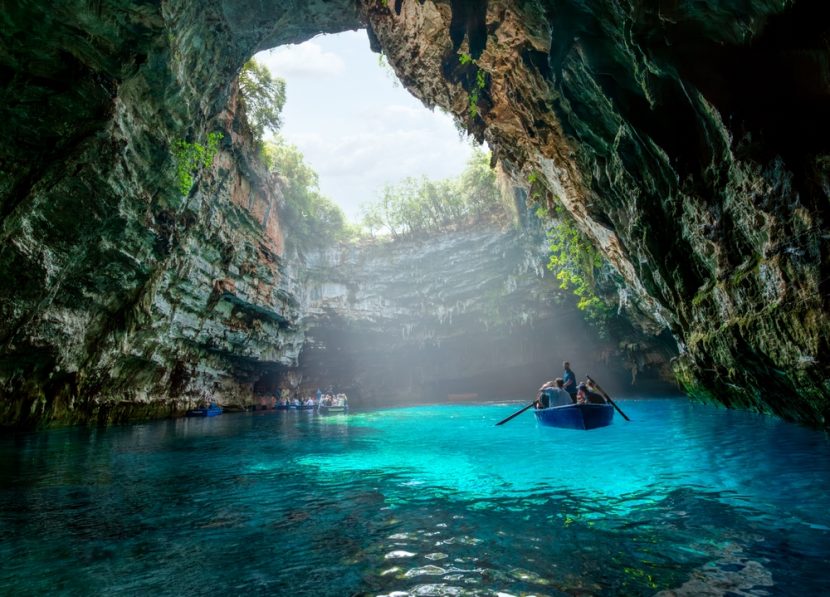
Swimming is not permitted in Melissani Cave. All visitors experience the underground lake via guided rowboat tours included in the €10 entrance fee. The prohibition protects the cave's fragile limestone formations and maintains water quality in a closed ecosystem that has taken millennia to form. Tour operators row visitors across the lake for approximately 15 minutes, passing through the illuminated central chamber where sunlight penetrates the collapsed roof.
The collapsed roof chamber of Melissani Cave reveals an underground lake fed by seawater that has filtered through fifteen kilometers of limestone bedrock, emerging as brackish water of exceptional clarity. When sunlight angles through the opening between late morning and early afternoon, the refracted light turns the water an luminous turquoise that photographs cannot fully capture. The lake sits twenty meters below ground level, accessible only by descending a staircase of one hundred steps carved into the rock face at Karavomylos. The no-swimming policy exists because human contact introduces oils, sunscreen residues, and microorganisms that disrupt the lake's chemical balance. The cave functions as a singular hydrological system where the water's composition—slightly saline, mineral-rich, and filtered over decades—supports specific microbial communities and maintains the clarity visitors come to see. A single swimmer can cloud the water for hours. The Ephorate of Underwater Antiquities also protects submerged archaeological remains discovered in 1951, including pottery and oil lamps dating to the fourth century BCE, evidence that the cave once served as a sanctuary dedicated to the nymphs. Your rowboat tour launches from a stone platform inside the first chamber, where natural acoustics amplify even quiet conversations into echoes. The boatman rows without an engine, preserving the site's stillness and preventing fuel contamination. The route crosses the main lake, circles beneath the roof opening where the light effect is strongest, and returns to the platform. No physical contact with the water or rock formations is allowed during the tour. Visitors remain seated throughout. The entire experience lasts fifteen minutes, though the queue to board during midday hours in summer can extend beyond an hour. Arriving between nine and eleven ensures shorter waits and softer light that reveals the lake's depth rather than overwhelming its color. The cave remains open daily from 09:00 to 19:00, with the last boat departing thirty minutes before closure. October through April sees fewer visitors and occasional closures during storms that raise the lake level and make the descent slippery. The surrounding village of Karavomylos offers little by way of facilities—one café, no ticket office beyond the cave entrance itself—so plan to carry water and arrive with your €10 per person in cash, as card payment is inconsistent.
“The collapsed roof chamber reveals an underground lake fed by seawater that has filtered through fifteen kilometers of limestone, emerging as brackish water of exceptional clarity.”
Swimming is strictly prohibited in Melissani Cave to preserve the archaeological integrity of the site and protect the delicate underground lake ecosystem. All visitors experience the cave exclusively via guided boat tours operated by trained staff.
Melissani Cave operates daily to accommodate visitors for the guided boat tours. These hours remain consistent throughout the week to provide access to the site.
The best arrival window is 09:00–11:00 to avoid long midday queues and experience the cave in its most tranquil state. Arriving early also provides optimal lighting conditions as the sun begins to illuminate the interior waters.
Mild, 20–25°C
This period offers comfortable temperatures and fewer visitors than the peak summer months.
Warm, 28–32°C
Expect significant wait times; prioritize an early arrival to secure a spot before the tour groups.
Cooler, 22–26°C
The environment is more relaxed and the cave remains accessible with shorter wait times.
—
Visiting on a weekday morning is the most effective way to ensure a quiet experience.
Verdict: The best time to visit is during the shoulder months of May or October, arriving promptly at 09:00 on a weekday.
Melissani Cave is located near the village of Karavomylos on the eastern coast of Kefalonia. The site is easily accessible by road, sitting just off the main coastal route between Sami and Agia Efimia.
Drive via Epar.Od. Sami-Agia Efimia to Karavomylos
KTEL bus from Argostoli station to Sami
Direct transfer from Argostoli or Sami
Upon arriving at the designated parking area in Karavomylos, you will find the entrance at the top of the site. Access to the lake level requires navigating a tunnel and descending a flight of 100 steps.
Everything you need to know about can you swim in melissani cave
No, you cannot swim in Melissani Cave as it is a protected archaeological and geological site. Strict conservation rules are in place to preserve the delicate ecosystem of the underground lake. Many visitors wonder can you swim in Melissani Cave, but swimming is strictly forbidden for all guests. Please respect the local regulations to help maintain this Kefalonia landmark for future generations.
The water in the cave is part of a fragile brackish ecosystem that requires protection from human interference and contaminants like sunscreen or oils. Since the area is a registered natural monument, authorities prohibit any physical contact with the water beyond the boat tour. Asking can you swim in Melissani Cave will always yield a negative response from staff.
While you cannot swim inside the cavern, the surrounding coastline of Sami offers several beautiful beaches with clear waters. The nearby Karavomylos area and Antisamos Beach are popular spots for swimming and enjoying the Ionian Sea. Visitors often combine their visit to the cave with these accessible swimming locations.
The entrance fee of 10 EUR covers your access to the site and the guided boat tour across the lake. This fee supports the maintenance of the facilities and the preservation of the site. When planning your visit, ensure you have the correct currency as specified by the official site.
Accessing the underground cavern requires descending a man-made tunnel with 100 steps. These steps lead you down into the subterranean environment where the boats are waiting. If you have mobility concerns, please consider the physical nature of this entry point before you arrive.
The best arrival window is between 09:00 and 11:00 to avoid the midday queues and enjoy a more peaceful experience. Visiting early also allows you to witness the sunlight hitting the water before the peak heat of the day. This timing ensures you spend less time waiting and more time enjoying the scenery.
Yes, children are welcome to join the boat tour provided they are accompanied by an adult. The short, calm boat ride is generally safe and enjoyable for families visiting this geologic site. Ensure that young children remain seated during the entire journey through the cave.